2025 Annual Letter: Standing At The Stone
In the late 1400s, if you walked through central Florence, you would have seen it.
Turn a corner near the cathedral and there it stood: a towering block of white marble rising from the working yard beside the Duomo. Nearly twenty feet tall. Narrow. Pale. Its surface bleached by sun and streaked by rain. It stood upright in the open air.
Florence had a name for it: The Giant.
This was not a forgotten marble. It had been commissioned by the Opera del Duomo, the civic body responsible for building Florence Cathedral. In Renaissance Florence, cathedral projects were civic projects. Art, politics, and city identity were inseparable. The marble had been quarried at great expense and transported into the city with ambition.
Florence intended to line its most important building with colossal figures drawn from scripture and history. Statues meant to tower above the city. Signals of confidence. Permanence. Cultural strength.
But the stone resisted. It was too narrow. Veined. Brittle in places. One sculptor began work and stopped. Another followed and abandoned it. Then Florence entered a period of instability.
And so the block remained.
For nearly forty years, The Giant stood beside the cathedral, exposed to the elements. Seen daily by clergy, craftsmen, and citizens alike. A public reminder of unfinished ambition.
It could not stay that way forever.
A young sculptor stepped forward. He was only twenty-six. Already recognized as exceptionally talented, but untested at this scale, with this stone, under this level of public scrutiny.
His name was Michelangelo. In Renaissance Florence, an artist’s life would feel familiar to any entrepreneur. Artists were independent operators. They competed for public commissions. They bore visible risk. A single failure could stall a career. A great one could define it.
Rather than move the stone, he built a wooden enclosure around it, right there in the center of the city, and worked in private for more than two years.
When shaping marble, every strike is permanent. There is no addition, only removal. The work comes in phases. At first, heavy blows establish form. Then the tools change. Tooth chisels. Flat chisels. The hammer lightens. In the final stages, the sculptor barely strikes at all. Force yields to restraint. The last work is not carving, but refining.
When David was revealed in 1504, the city fell silent.
What stood before them was not just a statue, but a transformation. A flawed block had become a deeply human figure. Calm. Focused. Tense before the fight. What had once stood as unfinished ambition became a shared source of pride.
Most people encounter the now-famous David at the end of its story. They see the precision of the final form and rightly marvel at the result. But enduring work is decided much earlier. It is decided in the patience to work under constraint and without applause. And it is in knowing when to strike hard and when to refine.
The point of the story is not genius. It is judgment exercised long before the first strike is made.
The best lessons in business rarely come from business. They come from life, from history, and from moments like this, where real work is done under real constraint.
This is Decada Group’s fifth annual letter. What follows is an accounting of what 2025 carved into Decada. Updates from across the portfolio. Reflections from incubating two new businesses. Leadership changes. Lessons drawn from stewarding five companies under limits of capital, timing, people, and circumstance.
When I think about building Decada, I do not think about a finished statue. I think about the stone still standing in the yard. Something with potential, history, and limits already etched into it. Something that can only improve through careful removal.
This letter is an attempt to draw those lessons out and apply them, imperfectly, to our own work. Each section looks at what 2025 carved into Decada and uses it to examine how enduring work is actually created. Not at the moment of completion, but in the long, quiet years before it.
When you study the part of the story most people skip, there is much worth paying attention to. I hope these moments prove useful to anyone interested in the craft of building something meaningful, in business or in life.

Photo by Nan Palmero / Wikimedia Commons
At the Five-Year Mark
2025 was a year of simplification. Refinement. Clarity through removal. A year of saying no.
Decada Group is a long-term holding company. We own and steward a small number of businesses across different industries in our backyard, here in Utah. Each company is run by its own leadership team. Day-to-day management is decentralized. Capital allocation and ownership decisions are centralized. That structure is intentional.
Businesses are best led by people closest to the work. Capital, however, flows to where it can be put to best use across a wider surface area. Our role at the holding company level is to deploy capital patiently, select and support strong leadership, and steward the portfolio over long stretches of time.
This structure leads to two important outcomes. First, none of our companies need to be pressured to grow at all costs for Decada to succeed. We can be patient and intentional. Second, Decada itself does not need to be large or busy to be effective. The work is judgment, not activity.
That context matters for understanding 2025.
We did not acquire a new company for the third year in a row. With the cost of debt still high and valuations stubborn, we remained selective and chose patience. Instead, we incubated two new businesses, supported leadership transitions, paid down debt, and held the course.
That posture shaped the year. Less addition. More removal. A willingness to look boring.
The results were tangible. In just five years, the portfolio has now returned over three dollars for every dollar originally invested. That capital has come back to Decada in real cash and been put to work again, while the underlying equity value of each business continues to compound.
Portfolio profits increased materially in 2025, extending a three-year pattern of double-digit growth measured by both Free Cash Flow and EBITDA.
This year also marked important milestones across the portfolio. Tailor Cooperative, the first company we founded, is weeks away from reaching ten years. Workshop SLC will reach five years under Decada ownership. Northern Electric, which recently crossed thirty years in operation, also reaches five years under our ownership.
For a firm whose name is a nod to the power of a decade, these moments reinforce something we believe deeply: great things take time.
At the five-year mark, we continue to report the same core metrics. Not as a scoreboard, but as a way to test whether those decisions are compounding as intended.
2025 Portfolio Snapshot
Organic YoY Revenue Growth: 17.1%
Organic YoY EBITDA Growth: 14.1%
Debt Service Coverage Ratio (DSCR): 4.54x
Distributions to Paid-In Capital (DPI): 3.30x
Total Value to Paid-In Capital (TVPI): 5.71x
With all of our companies now beyond the J-Curve, growth has settled into a steadier, more durable rhythm. EBITDA grew 14.1% in 2025, continuing a three-year run of double-digit expansion. One company shifted from cash to accrual accounting during the year, which dampened reported growth; on a like-for-like cash basis, EBITDA growth would have been 60.6%.
We continue to operate conservatively, with limited debt. Our 2025 debt service coverage ratio of 4.54x is roughly four times traditional underwriting minimums. That conservatism shows up in real cash. In 2025, distributions to Decada were 16.0% of total portfolio revenue.
Decada Group’s true strength is best reflected in our compounding outcomes. In just five years, we have distributed not only all invested capital, but 3.30x that amount. In 2025 alone, distributions equaled 106.7% of total paid-in capital. All the while, our businesses continue to grow and compound, with no intention to sell. Total value to paid-in capital reached 5.71x by year-end.
We don’t write this letter to satisfy outside investors or shareholders. We don’t have any to report to.
We write it for the people in and around Decada. Our customers. Our operators and their teams. The owners who may one day trust us with their life’s work. The future teammates and partners who want to understand how we think, what we value, and whether we hold ourselves to full account.
2025 was not a year of acquisitions or headlines. Adam and I continued the practice of taking no distributions out of Decada, choosing instead to redeploy capital into the long work ahead.
What follows builds on this foundation.

Photo by StockCake
Principle 1: Work The Material You Have
Michelangelo did not begin with perfect marble. He inherited constraint. A narrow, weathered block shaped by decades of exposure and prior failure. Waiting for better material would have been understandable. It also might have meant never beginning.
Our first acquisition, Workshop SLC, looked more like that block than a finished work. It was our first deal. Adam and I were wide-eyed, still learning what mattered and what did not. The business needed real work. Barely two years of tax returns. A loose operating model. No proven profitability.
After a long night in the financials, I remember looking at Adam, exhausted, saying, “Well, if the business doesn’t work out, I do like the real estate.” Not the shrewdest diligence process. But we believed in the vision. We signed the transaction, personally guaranteed the debt, and got to work.
Today, we would not make that same acquisition. Not because it didn’t work. It did. But because it taught us what we now look for. Each business since has increased in scope and quality. Our standards sharpened as our experience did.
That first business earned us something we could not have acquired any other way. Entry into the arena. We learned under real constraints. Made mistakes where they mattered. Felt ownership when the work was public and the outcomes were ours. It gave us material to work with before we had the judgment to demand better.
This is not an argument for recklessness. It is an argument against waiting until you feel entitled to begin. Perfect marble has a way of never arriving.
The contrast is visible today. Workshop SLC is now a critical part of Decada Group’s foundation. The business we acquired nearly five years ago now hosts as many classes every few days as it once did in its entire history.
When our President, Ron Nelson, took the helm earlier this year, we already had a beautiful business with a growing community. Ron brought a bold, long-term vision forward: to become a true art institution. A ten-year mission grounded in the work already underway. He recognized the strength of what was already there and focused on the discipline required to refine it. Not reinvention. Craft.
The model expanded and revenue diversified. Partnerships with the University of Utah for continuing education. Corporate events with Delta Air Lines and the Utah Jazz. Public impact work, including the successful execution of a grant from the Governor’s Office of Economic Opportunity to bring art education to low-income communities.
We now run Utah’s leading Art Club, hosting museum tours, lectures, and social nights. The business is anchored by a strong, subscription-based membership with a consistent, engaged roster of student members.
The institution took shape slowly, then all at once. What changed was not the material. What changed was our ability to work it.
Most enduring work begins this way. Not with ideal conditions, but with something already in front of you. A business with rough edges. A role you are not fully prepared for. A set of constraints you did not choose.
The temptation is to wait until the material improves. The quieter discipline is to accept it as it is and begin anyway, knowing that judgment is not granted in advance. It is earned through contact with the work.
There is no substitute for earning your way into the next level of work.

Workshop SLC, 2025
Principle 2: Become a Beginner Again
Michelangelo had already arrived. He chose to begin again.
By the time he carved David, he had momentum. He was known. He could have stayed on familiar ground, reinforcing a growing reputation with work he already knew how to do. Instead, he stepped toward a project others had rejected, with an uncertain outcome and no guarantee of success.
Later in a career, no one makes you take risks anymore. You eventually earn enough credibility to protect what you have built. To stay comfortable. To keep doing work you already know how to do.
For us, the work has only grown when we have been willing to give that protection up.
That lesson first appeared at Tailor Cooperative. After nine strong years in Salt Lake City, TC was established. The brand carried weight. The systems worked. We knew the market. We knew the craft.
Opening a second location in Chicago erased all of that overnight. Chicago was a larger pond, and no one there cared what we had built in Utah. Suddenly, we were new to town, operating on a startup budget again. The work had to be earned from scratch.
That responsibility fell to Caitlin Andrew.
Caitlin joined Tailor Cooperative five years ago, part-time on the floor. She moved to full-time. Then to General Manager. And eventually, she took on responsibility for leading the organization as President. When we decided to open in Chicago, Caitlin relocated to lead it.
The early months were humbling. There was no insulation. More than once, we were on video calls when Caitlin closed her laptop mid-board meeting to greet a client who had just walked into the shop. Tape measure over her shoulder. Hands on the work. Present with customers.
This was not disorganization. It was deliberate exposure. Caitlin, now responsible for a far larger business, put herself back on the floor, earning trust one fitting at a time.
That same dynamic showed up again later in the year with Durable.
Adam and I believed small business in Utah needed something that did not yet exist. Our answer was to build what we call Utah’s Business Commons. A shared space for business owners to gather, learn, and connect. Every great city has a commons. We wanted one for small business here in our state’s capital.
Small business needed something big. But we were a small team. So we built it ourselves.
That meant stepping out of abstraction and into contact with the work. Booking venues. Hosting business owner meetups. Setting up chairs. Testing formats. It was work that did not scale and did not look impressive from the outside. We stood in rooms where no one knew what Durable was. Or confused it with Decada. Or did not care either way.
Some events fell flat. Early programming was uneven. Venues were imperfect. Momentum came in starts and stops.
One event had exactly no one show up. Standing alone in a prepared room resets your relationship with the work. After prior success, it strips away the illusion that reputation carries forward. It forces you to listen more closely, adjust faster, and earn trust the slow way.
By the end of the year, the shape of both efforts had changed.
Tailor Cooperative had opened a beautiful, growing location in downtown Chicago, a market roughly eight times the size of Salt Lake City. That journey allowed us to welcome Caitlin into direct ownership of the business. From part-time employee to equity holder. As we enter 2026, she steps into the role of CEO.
Durable grew into a community of over 1,000 small business owners across Utah. We hosted more than 45 events. The rooms filled. The conversations deepened. A real community emerged, with a heartbeat and a bold vision.
Those outcomes did not come from protecting advantage. They came from choosing to look inexperienced again.
This is a pattern worth paying attention to in any enduring craft. Early success creates pressure to preserve. To stay polished. To avoid work that might expose your edges. But the work that lasts is built by people willing to return to the mat. Not because they have forgotten what they know, but because they refuse to let what they know become a ceiling.
“There is no way to get better and look good at the same time. Give yourself permission to be a beginner.”

Caitlin Andrew, CEO of Tailor Cooperative
Principle 3: Remove Until The Shape Appears
You do not assemble a sculpture. You remove everything that is not the David.
Shaping marble is an act of creation by subtraction. You do not add form. You reveal it. Every strike removes what does not belong so the underlying shape can emerge.
If you had walked into our office in 2022, you would have found a full team operating at the holding company level across finance, marketing, HR, and management support. At the time, this made sense. Our companies were young. Newly acquired. Decada acted as a shared services layer, stepping directly into the work inside our operating companies.
We ran digital marketing campaigns for an electrical contractor. Led recruiting for an art school. Closed books and filed sales tax returns. We were a holding company, but also an agency. It felt productive. Our team was everywhere. Solving problems. Unblocking work.
In hindsight, it was a local maximum.
Local maxima are seductive. You reach a peak that feels like the summit. From there, the view looks good. But from that vantage point, you cannot see the higher ground beyond it. You are optimized for the terrain you are standing on, not the best one.
The shared services model was that peak. It worked, for a while. But as our companies matured and leadership strengthened, the structure began to work against us. Internal fees softened accountability. Incentives blurred. It became harder to tell which businesses were truly durable and which were being supported by layers of abstraction.
In last year’s letter, I wrote about our efforts to decentralize. In 2025, we carved more decisively.
One of the most consequential cuts came when we spun our finance function out of Decada entirely, forming our fifth company, Durable Finance. No more in-house finance team. No shared services fee safety net.
In 2025, Decada Group removed every shortcut.
We only made money if our companies did. The work had to stand on its own: quality businesses, run profitably. What had once been a meaningful portion of our income was intentionally removed, leaving no buffer or abstraction. Only results. As reported earlier in this letter, 2025 distributions exceeded all prior years and returned more than our total paid-in capital in a single year, bringing cumulative distributions to 3.30x.
For Durable Finance, the separation mattered just as much. Once independent, we recruited Pierson Watts to lead the firm as CEO and gave him room to build its own identity.
Pierson took full ownership of the spinoff. He built the team, put real operating rigor in place, and made the hard early decisions required to stand the business up quickly and cleanly. Under his leadership, Durable Finance scaled in its first year and issued distributions at 35.4% of revenue.
Spinning it out was not a loss. It was a release. And Pierson proved equal to the responsibility.
The impact of simplification extended further. As Decada stepped out of day-to-day roles across five companies, space opened up. The hammer lightened.
For the first time in years, we were no longer running from problem to problem. We had room to think. To exercise judgment. To focus on stewardship rather than activity.
We began to do our most important work better. Running tighter diligence and evaluating opportunities with clearer eyes. We gained room to find the right leaders, not just available ones. To support them as thought partners. To help them see around corners instead of solving yesterday’s problems.
In 2025, our most meaningful progress did not come from adding capability. It came from removing what no longer belonged.
Today, Decada’s role is clearer than it has ever been. We start and acquire strong companies. We recruit capable leadership. And we support them well, sharing in the long-term stewardship of durable, community-anchored businesses.
The shape is simpler now. And because of that, stronger.
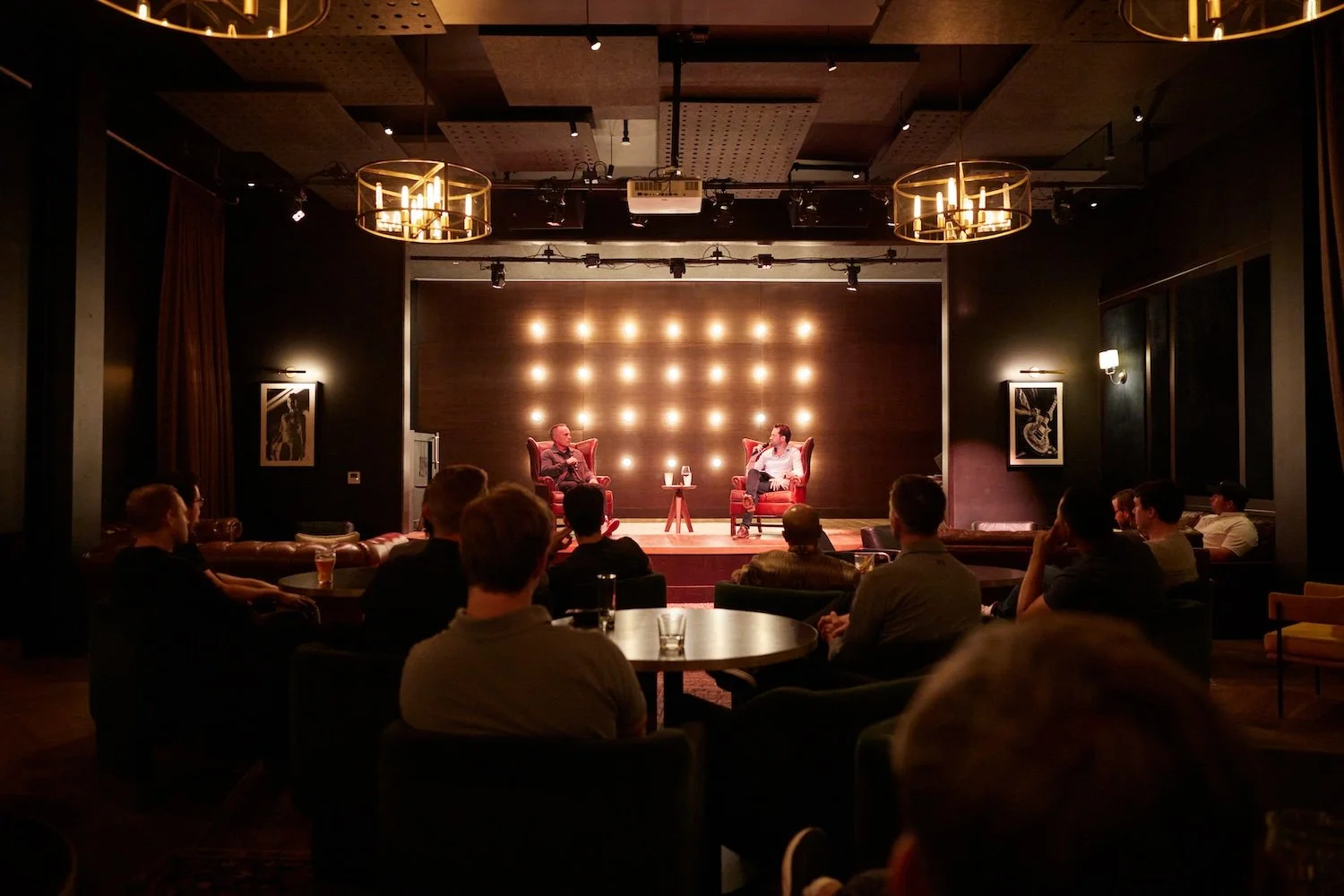
The Durable Small Business Speaker Series, 2025
Principle 4: Time Is The Advantage
Before David became a masterpiece, the marble waited. For decades.
What made David possible was not talent alone. It was time, and the willingness to stay with the material long enough for something extraordinary to be revealed.
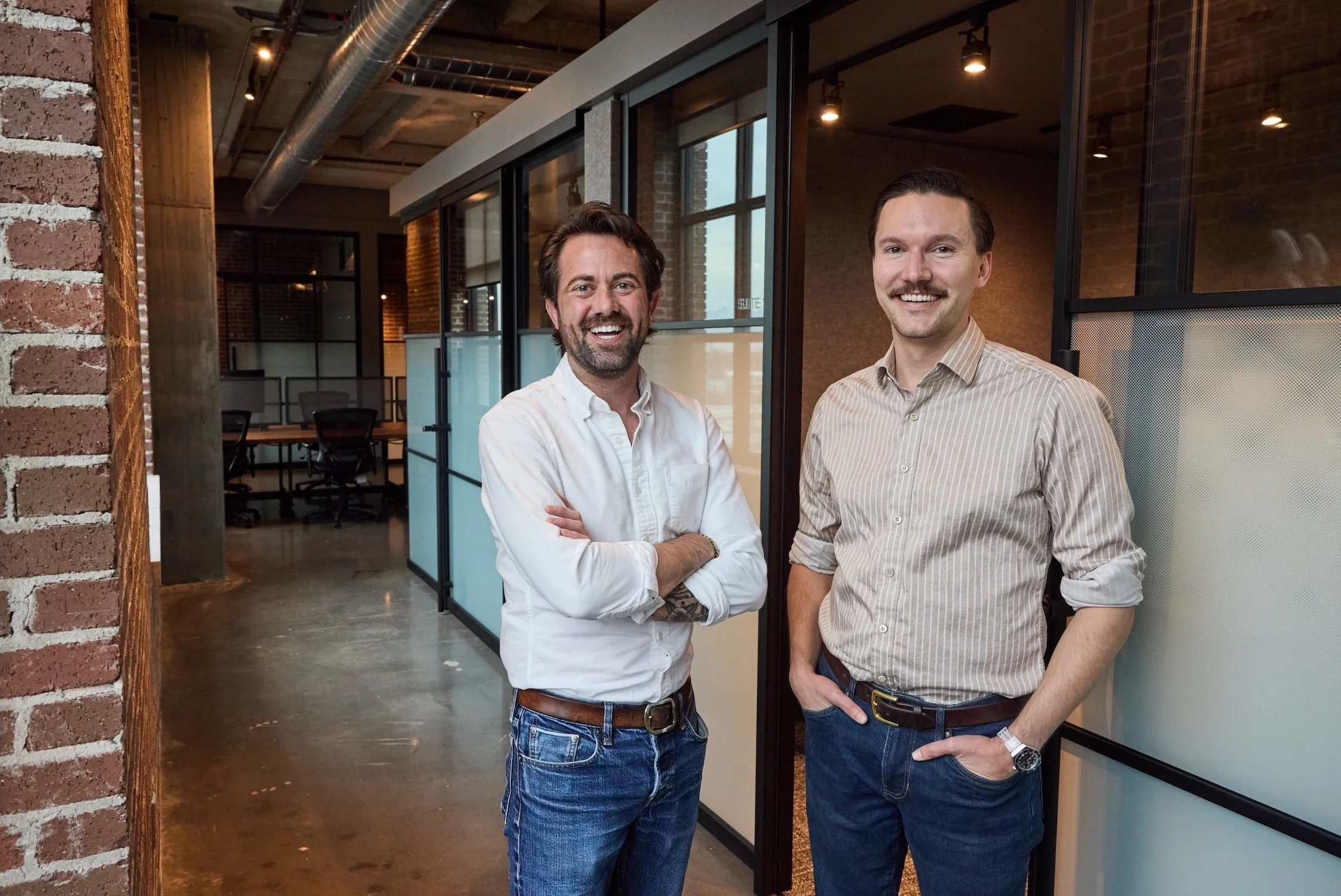
In a few weeks, Adam and I will mark ten years since we founded Tailor Cooperative. TC predates Decada by five years. It is where we learned, firsthand, how hard and how slow real company building can be.
A decade is long enough for the early uncertainty to fade. Long enough for momentum to look inevitable in hindsight. But the truth is simpler. TC survived because we stayed when leaving might have been easier.
We built TC “zero to one” in the punishing industry of retail. I remember staring soberly at our first lease agreement before signing it. $990 a month for two years. At the time, that amount and that term felt enormous.
Like sculpting, company building happens in phases. The early work is forceful. Heavy blows to establish form. The first years of TC were defined by big moves and constant correction. We hired the wrong people and later had to let them go. Then we hired the right people, only to watch them leave for larger, more established companies. Adam and I regularly skipped ourselves when running payroll. Every client issue felt existential. Progress was uneven and rarely visible.
Then something subtle happened. There was no breakthrough moment. The work simply changed. Decisions improved. Customers returned more often and spent more. Employees began to compound instead of churn. Systems hardened. Patterns held. What once felt like hacking at stone began to feel like shaping it. The tools changed. The blows softened. The work became quieter and more precise.
Last year, I wrote about Tailor Cooperative being selected to suit more than one hundred of Utah’s business and civic leaders traveling to Paris to accept Utah’s 2034 Olympic nomination. It was hard to imagine anything surpassing that moment.
And then, just a few weeks before closing 2025, the team completed the largest transaction in the company’s history. A single purchase that equaled the business’s first eleven months of combined revenue. What once would have felt unimaginable had quietly become normal.
That is what time does.
Northern Electric tells the same story, without ceremony. Thirty years old. Five under our ownership. No reinvention narrative. No press releases. Just crews dispatching early each morning, doing essential work across the state, year after year. This past year, we made the final payment on the seller financing used to acquire the business and appointed a new General Manager, a master electrician with four decades of experience. The fourth decade of Northern Electric is just beginning.
In our first annual letter, five years ago, I wrote: “Holding to this long sighted value is our strategic edge. We are not beholden to the sirens of the market or the short sighted mindset of investor-owned businesses.”
That belief has only sharpened.
I speak often with founders and buyers who want to build something great. They ask when things start to get easier. When the business stabilizes. When they can step back. When it finally gets good.
Most assume the answer is year two or three. It rarely is.
Five years is often when things finally start to get good. And ten years is when the nature of the business truly changes.
It is when systems harden. Patterns hold. Early decisions compound into structure. And just as that quiet compounding begins to reveal its power, many owners step away. Not because the business is failing, but because the work has become unremarkable. Quiet. Boring.
This is the mistake.
Fund-backed models often institutionalize this error, forcing exits precisely when the economics and culture are beginning to mature. For us, five years feels like the beginning.
This is not unique to our companies. It is a feature of enduring work in any craft. The greatest returns rarely come from speed or cleverness. They come from staying long enough for small advantages to stack. From resisting the urge to leave when the work stops offering novelty and starts offering depth.
Do not confuse endurance for stubbornness. Endurance is understanding where progress actually comes from.
The question is not how fast something takes shape. It is whether you are willing to remain long enough to see what time is capable of revealing.
Time changes the nature of the work.
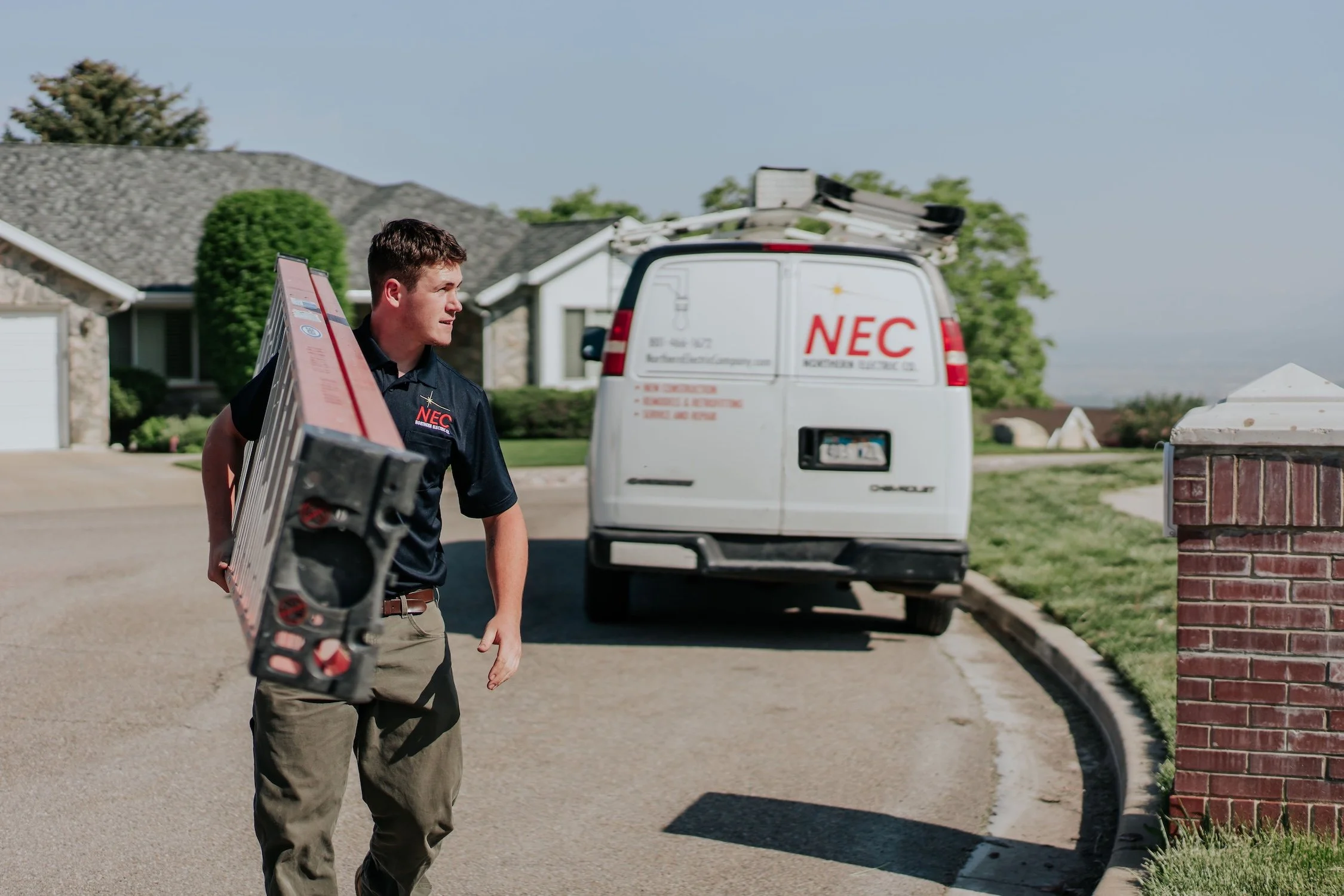
Northern Electric, 2025
At the Stone, Before the Next Cut
When Michelangelo finished David, Florence argued about where to place him. The original plan was to install him high on the cathedral. But once the statue existed, it felt wrong to keep it distant. So the city placed him at its center, outside the Palazzo Vecchio, facing outward. A public reminder of what Florence believed about itself.
Decada is simpler than it used to be. Leaner. More decentralized. Capital is compounding not because we are doing more, but because the businesses themselves are stronger.
We are entering the second half of Decada Group’s first decade with five strong businesses, the right leadership in place, and a clearer sense of what we are here to build. The work ahead is not about acceleration. It is about continuation.
That belief shaped our decision to build Durable, Utah’s Business Commons. Not as a program, but as shared infrastructure for business owners. A place to gather, learn, and stay with the work together. Over decades, we believe it will quietly strengthen everything we do. It is an effort that would make little sense on a two- or five-year horizon, but felt inevitable when viewed across twenty.
Durable is one of five Decada Group companies. Decada’s work remains the work of stewardship.
As we look toward 2026, mine and Adam’s posture remains unchanged. We will continue to evaluate acquisitions patiently. We will try to remain the slowest heartbeat in the rooms we are in. Exercising judgment. Allocating capital with restraint.
If David teaches anything, it is that most people misread the timeline. They marvel at the finished form without seeing the decades that came before it. But most enduring work spends a long time looking unfinished.
If the work feels slow or unclear, it does not mean it is broken. You may still be carving.
Work with the material you have. Accept moments of exposure. Remove until the shape appears. Stay with it long enough for time to do its work.
Because year five is where many people leave. Not because the work is impossible, but because it stops rewarding them quickly.
Boldness rarely announces itself. It looks like staying when leaving would be easier. Shaping when recognition has not arrived. Committing to work that will only make sense later.
We write these letters as a record of our own work, and as a reminder of what endures. Businesses and lives worth building reveal themselves slowly, to those willing to remain with the material.
If you are willing to do that in 2026, even imperfectly, you are not behind.
You are standing at the stone.
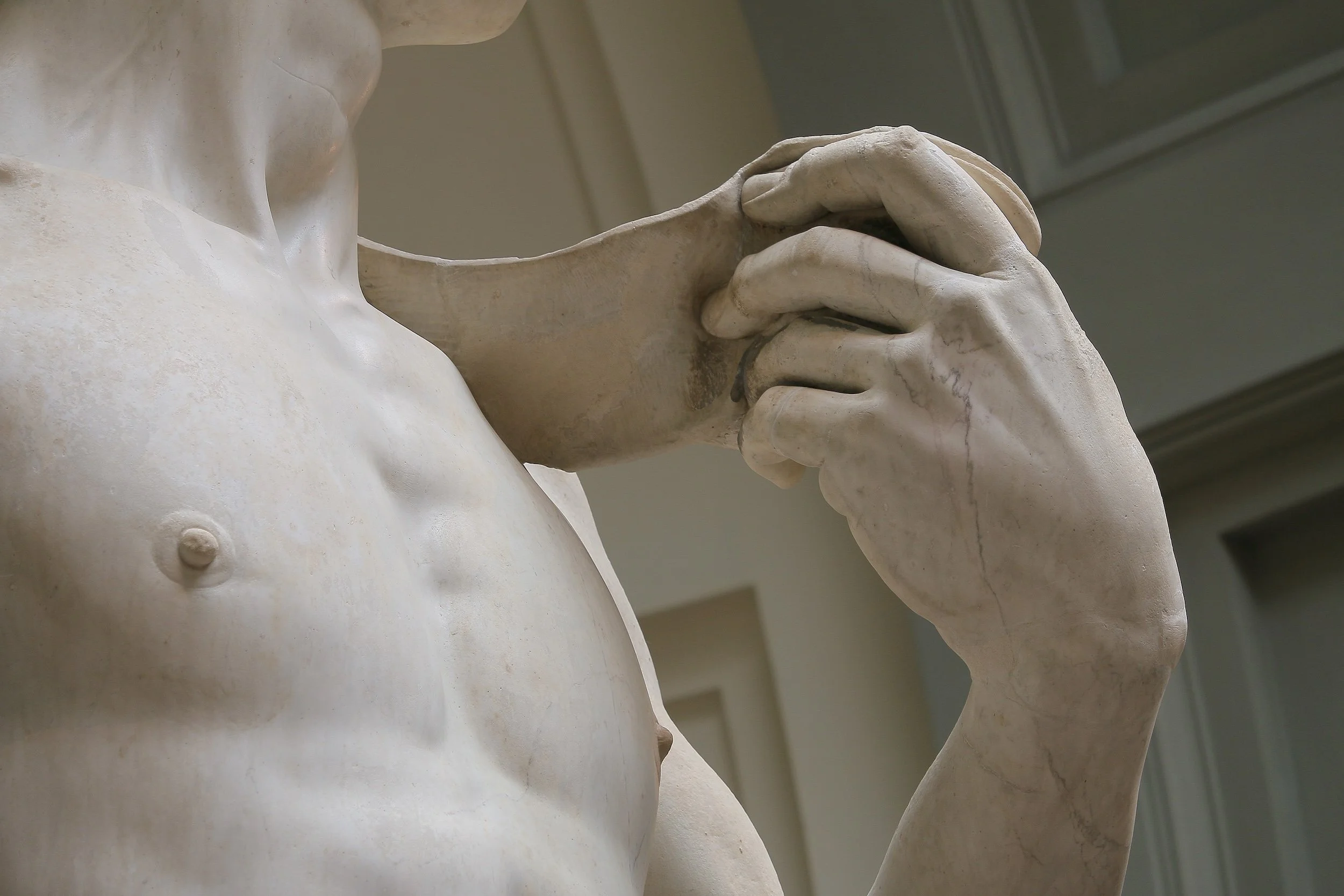
Photo by Jörg Bittner Unna / Wikimedia Commons